
A good wedding timeline is not about squeezing every last minute out of the day. It is about giving the day enough shape so everyone knows what is happening, while still leaving room for the moments you cannot plan for. The laugh while someone tries to fix a buttonhole. Your dad sees you ready for the first time. The quiet five minutes after the ceremony, when it suddenly hits you that you are married. The chaos, the hugs, the weather, the conversations, the people you have not seen in years. Those are often the photographs that mean the most later. As a wedding photographer, I am always happy to help couples think through the day's flow. Not because I want to control it, but because a calm timeline and flexibility give you more freedom. When everything is packed too tightly, the day can start to feel like a list of jobs. When there is breathing space, it feels like a wedding.
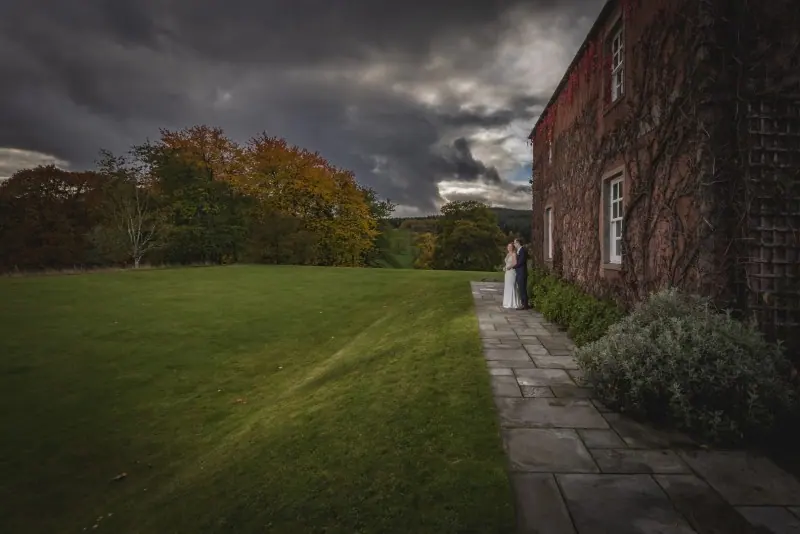
Start with how you want the day to feel.
Before you think about timings, think about the feeling. Do you want a slow morning with your closest people? Do you want time to enjoy a drink after the ceremony? Do you want to disappear for portraits for ten minutes, rather than be away from everyone for an hour? Do you want relaxed family photographs without everyone being hunted down at the last second? Those questions matter more than whether prep starts at 9.30 or 10.00. The best timelines usually come from couples who know how they want the day to feel. Calm. Social. Elegant. Fun. Family-focused. Landscape-led. Whatever that is, the timeline must support it. If your day is full of tiny gaps, rushed transitions and too many planned photographs, it becomes harder for real moments to happen naturally. You are always being moved on to the next thing.
Give the morning more space than you think.
Wedding mornings often look simple on paper. Hair. Makeup. Getting dressed. A few details. Maybe a glass of fizz. In reality, they are full of moving parts. Someone cannot find their shoes. Flowers arrive. A dress needs to be buttoned. A parent pops in. The room gets busy. The makeup artist needs 10 more minutes. Someone suddenly remembers the rings are in another room. That is normal. A relaxed morning does not need to be slow, but it does need a bit of margin. I would much rather have ten spare minutes to photograph natural moments than watch everyone rush out the door while the atmosphere disappears. For photography, the most useful thing is to aim to dress earlier than you think you need to. If you are leaving for the ceremony at 1.30, being in the dress at 1.25 is not really enough. It leaves no time for portraits, family, a quiet breath, or anything meaningful. That final part of the morning is often beautiful. It is worth protecting.
Do not let group photographs take over the drinks reception.
Family photographs are important. I entirely understand why couples want them. They are often the photographs that parents and grandparents value most. But they can also eat into the best part of the day if the list gets too long. From my point of view, I let my couples lead on this. They know who they want in these photos, who is coming to the wedding that is important to them. I tend to recommend 10-15 of the most important ones. But don’t worry, I’m always available throughout the day to capture any others that you might have forgotten. After the ceremony, people want to hug you. They want to congratulate you. You might want a drink. You might want to actually see the venue you spent months choosing. If the next forty minutes are spent calling out endless combinations of people, the drinks reception can disappear before you have had a chance to enjoy it. My advice is to keep the proper family list tight. The key groups are usually immediate family, grandparents, and siblings, and perhaps one or two wider-family photographs if they really matter to you. Everything else can often be photographed more naturally during the day. A smaller list does not mean people are less important. It simply means you are choosing not to turn your wedding into a school photo session.
Build in ten minutes alone together after the ceremony.
One of the best things you can do is set aside a little time right after the ceremony. Not long. Even ten or twenty minutes. You have just got married. Everyone is excited. The energy is high. It is very easy to be swept straight into the confetti photo, hugs, group photographs, canapés and suppliers asking what happens next. A short pause gives you both a chance to breathe. Sometimes this happens naturally in the car between church and venue. Sometimes it is a quiet room at the venue. Sometimes it is a walk around the grounds before joining everyone else. It does not need to be staged. In fact, it is better when it is not. That small bit of space can often produce some of the most honest photographs of the day, because you are not performing for anyone. You are simply taking in what has just happened. You wouldn’t believe the number of times couples actually say to me, "Look forward to getting away with me for a few photos." It gives them that chance to be alone for the first time as a married couple.

Keep your couple portraits short, calm and well-timed.
Couple portraits do not need to dominate the day. For most weddings, I would rather take you away for a short, relaxed window than keep you away from your guests for ages. Ten to twenty minutes is often plenty, especially if we have chosen the right time and location. The best portraits usually happen when the light is good, the atmosphere is calm, and you are not worrying about speeches starting in three minutes. If the venue has beautiful grounds, a strong view, old stone, woodland, coastline, or open Highland light, it is worth allowing a little time to make the most of it. That does not mean turning the day into a photoshoot. It means giving yourselves enough space to slow down and make photographs that feel like you. For summer weddings in Scotland, evening light can be particularly good, giving an opportunity to head outside between the meal and the first dance. If the weather and timings allow, a short wander later in the day can work beautifully. It gets you away from the noise for a few minutes and gives the photographs a softer, more relaxed feel.
Travel Is Important.
Travel is one of the easiest things to underestimate. If you are getting ready in one place, marrying somewhere else, then travelling to a venue, every move takes longer than it looks on a spreadsheet. People need to gather bags, find bouquets, get into cars, park, walk, speak to guests, and settle again. This is especially true for rural weddings, Highland weddings, estate venues, coastal locations and church ceremonies. A ten-minute drive is rarely just ten minutes on a wedding day. I always suggest adding a small buffer around travel, especially if you are moving between locations. It protects the day's atmosphere and stops everyone from feeling as though they are constantly catching up.
How location changes your wedding timeline.
Inverness wedding photographer page
If you are planning a wedding around Inverness or the wider Highlands, timeline space becomes even more important. Many venues have beautiful grounds, views, long driveways, lochside spots or nearby landscapes that deserve a little breathing room rather than being squeezed into five rushed minutes. I have written more about photographing weddings in this part of Scotland on my Inverness wedding photographer page, especially for couples who want relaxed coverage with the landscape and atmosphere of the Highlands naturally part of the story.
Caithness wedding photographer page
For Caithness weddings, I always think the timeline needs to respect the distance, the weather and the coastline. Places like Dunnet, Thurso, Wick, and the north coast can give you incredible light and atmosphere, but they do not always work well with a day planned down to the last minute. Leaving a little space means you can use the landscape properly without feeling as though the photographs are pulling you away from your guests. I talk more about my connection with the area on my Caithness wedding photographer page.
Aberdeen wedding photographer page
Aberdeen and Aberdeenshire weddings often have a different rhythm again. You might be moving between a city ceremony and a country house venue, or spending the whole day at an estate, castle or hotel with plenty of space around it. Either way, the best timelines are the ones that allow for relaxed family photographs, a short portrait wander and still enough time to enjoy the drinks reception. If you are planning your day in this area, my Aberdeen wedding photographer page gives a better feel for how I approach weddings across the city and shire.
Elgin wedding photographer page
For weddings in Elgin, Moray, and the surrounding area, I think there is real benefit in keeping the day calm and unfussy. Whether you are getting married at a local hotel, a countryside venue or somewhere closer to the coast, a good timeline gives you room for family, weather, travel and those quieter in-between moments that can easily be missed. You can read more about my approach to local weddings on my Elgin wedding photographer page.
Fife wedding photographer page
Fife weddings can have a lovely mix of coast, countryside, historic towns and elegant venues, but that also means it is worth being realistic with timings. If you want photographs around St Andrews, the East Neuk or the wider landscape, it helps to build in space rather than trying to force everything into one tight portrait slot. A relaxed timeline lets the setting become part of the day without making the day feel staged. I have shared more about my approach to weddings in the area on my Fife wedding photographer page.
Leave space around the meal and speeches.
The wedding breakfast is often where the day naturally slows down. People relax. The nerves settle. The room fills with conversation. It is also the part of the day where timings can drift. Guests take longer to sit down. Speeches run over. Food service takes time. Someone decides to do an extra speech. None of that is a problem unless the rest of the evening has been planned too tightly. If you are having speeches before the meal, allow more time than you think. If speeches follow the meal, remember that the room's energy will be different. Neither is right nor wrong. It depends on what suits you. From a photography point of view, the main thing is not to rush straight from dinner into cake-cutting, the first dance, and evening guests without a little breathing space. The evening often has lovely in-between moments, and they are easy to miss if everything is stacked together.
Let the weather be part of the plan.
In Scotland, the weather is not something to ignore. It is something to work with. You do not need a perfect forecast to have beautiful wedding photographs. Some of the best light happens around changing weather. A bit of wind, cloud, mist, or rain can add atmosphere, especially in the Highlands, Aberdeenshire, Moray or anywhere with a strong landscape around you. But your timeline needs to be flexible enough to capitalise on opportunities. If portraits are scheduled for a specific ten-minute slot and it rains, that can be stressful. If there is a little space later in the day, we can often make use of a break in the weather. This is where a relaxed timeline helps. It gives you options.
Do not plan every photograph.
It is useful to plan the essential photographs. Family groups. Any important details? A few portraits. Maybe a particular location at the venue. But you do not need to plan every photograph; I know what needs to be captured without planning, and that is the experience you are gaining from having me at your wedding. The real story of the day comes from watching what happens. The people, the reactions, the hands, the glances, the small bits of humour, the weather, the movement, the quiet bits and the messy bits. If your timeline is too focused on planned photographs, it can leave less room for the photographs that actually feel like your wedding. That is especially true if you are drawn to documentary wedding photography. The whole point is not to turn the day into a production. It is to photograph it with care, observation and a bit of trust.
A simple wedding timeline example
Every wedding is different, but a relaxed full-day timeline might look something like this. Morning preparations begin with enough time for the final stages of hair, makeup, details, people arriving, and getting dressed without rushing. The ceremony happens with a little buffer before and after, so no one feels as if they are being pushed straight from one thing to the next. After the ceremony, there is time for confetti, congratulations and a short pause before family photographs. Group photographs are kept focused, with someone helpful on hand to gather the group; it speeds up the process and lets the guests return to mingling. Couple portraits are quick and relaxed, ideally at a time of day when the light and timing work naturally. The drinks reception is not swallowed up by photographs, so you actually get to spend time with your guests. Dinner and speeches have enough space around them to drift slightly without causing stress. Later in the evening, there may be a short chance for a few portraits in softer light before the first dance and party. That kind of timeline gives the day structure, but not stiffness.
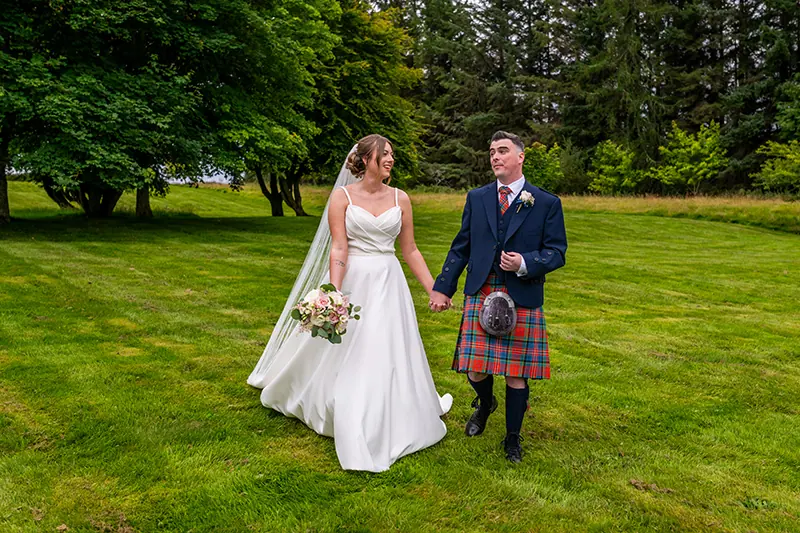
Planning your day around the right venue and photography style
A wedding timeline works best when it reflects the venue, the light and the kind of photographs you actually want. If relaxed, natural coverage is important to you, my wedding photography approach page explains more about how I photograph the day without turning it into a photoshoot. It is also worth looking through my wedding photography investment page if you are starting to work out how much coverage you need, as the right collection can make a big difference to how calm the day feels.
Venue choice also changes the rhythm of the day. A country house wedding at Logie Country House or Ardoe House will often flow differently from a Highland hotel wedding at Drumossie Hotel, a Caithness celebration at Stemster House, or a coastal Highland wedding around Dornoch Station. Some venues give you everything in one place, while others benefit from a little more space for travel, portraits, weather and family photographs. Thinking about this early helps you build a timeline that feels relaxed rather than rushed.
Frequently Asked Questions About Wedding Timelines
How much time should we leave for wedding morning preparations?
It depends on the size of your wedding party, travel and where you are getting ready, but it is always worth leaving more time than you think. The final part of the morning often includes getting dressed, buttonholes, flowers arriving, family popping in and a few quiet photographs before you leave. If the morning is too tight, it can feel rushed very quickly.
How long should we allow for family photographs after the ceremony?
For most weddings, I would suggest around 15 to 25 minutes for family photographs, as long as the list is kept focused. Immediate family, grandparents and a few key groups are usually enough. A long list can quickly take over the drinks reception and leave you with less time to enjoy your guests.
How much time do we need for the couple portraits?
You do not need to be away from your guests for ages. Around 10 to 20 minutes is often enough for relaxed couple portraits, especially if the location and light are working well. If the venue has beautiful grounds, coastline, countryside or Highland views, it can also be worth leaving space for a short evening wander when the light is softer.
How do we make our wedding day feel less rushed?
The best way to make a wedding day feel less rushed is to build in small pockets of breathing room. Leave space around travel, getting dressed, group photographs, dinner and speeches. A calm timeline still gives the day structure, but it also allows for real moments, conversations, and the day's natural flow.
Should we plan every photograph in advance?
No. It is useful to plan the important family groups and any specific photographs that really matter to you, but you do not need to plan every image. The strongest wedding galleries usually come from a mix of a few carefully planned photographs and the natural, unscripted moments that happen throughout the day.
What is the best time of day for wedding portraits?
The best time depends on the season, venue and weather, but softer light later in the day can be beautiful, especially for outdoor portraits. In Scotland, the weather can change quickly, so it helps to keep the timeline flexible. That way, if there is a break in the weather or a lovely bit of evening light, you can make the most of it without stress.
Do we need a detailed wedding timeline?
You do not need to plan the day minute by minute, but a clear outline is very helpful. It means your suppliers, wedding party, and venue know what is happening, while still giving the day room to breathe. The aim is not to control everything. It is to create enough structure that you can relax and enjoy it.
The best timelines feel calm, not controlled.
A wedding timeline needs to help the day breathe. It should give you confidence that the important things will happen, without removing all the spontaneity. It should make room for the people you love, the place you chose, and the parts of the day you did not even know would matter. Real moments rarely happen when everyone is being rushed. They happen in the space between things. The best timelines leave room for that.
Words & photographs by Mike Custer, Fitlike Photography.


